What is a Virtual Power Plant (VPP)?
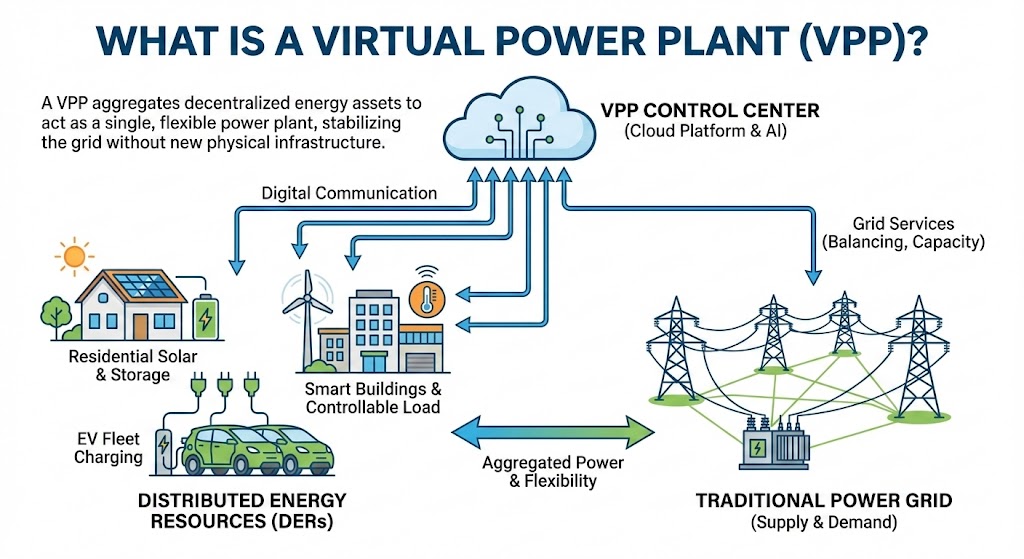
A Virtual Power Plant isn't a massive brick-and-mortar facility with smokestacks. Instead, it is a cloud-based, centralized digital network that aggregates thousands of decentralized, Distributed Energy Resources (DERs).
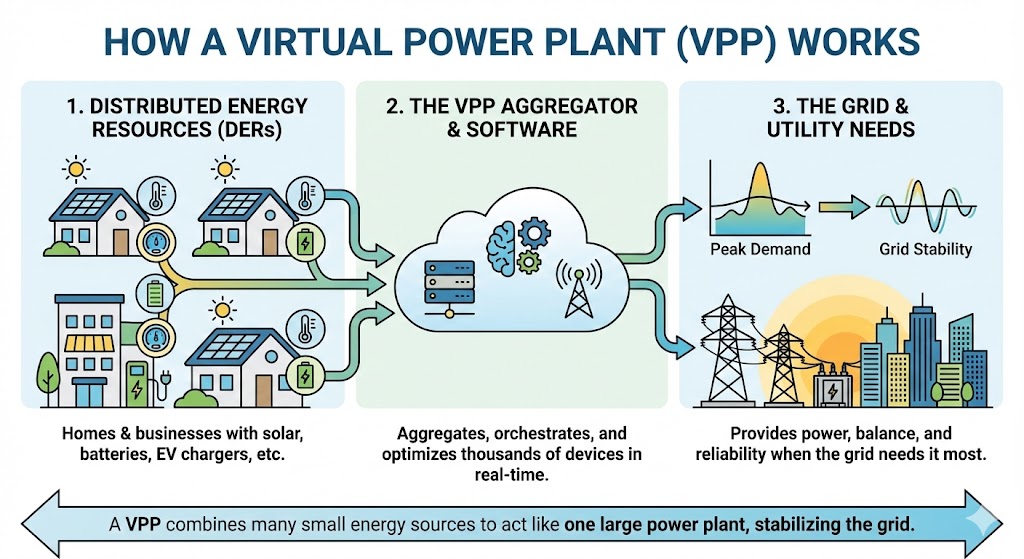
By using advanced software, IoT devices, and AI, a VPP coordinates these decentralized assets to act like a single, massive, dispatchable power plant. When the grid is stressed, the VPP can supply energy, reduce demand, or provide critical grid stabilization services just like a traditional gas-fired "peaker" plant would—but faster, cleaner, and often cheaper.
Core Components of a VPP (The DERs):
Generation: Rooftop PV modules (solar panels), module-level power electronics (optimizers, microinverters), hybrid or multi-mode inverters.
Storage: Residential home batteries, commercial energy storage systems, and the battery packs inside Electric Vehicles (EVs).
Controllable Load (Demand Response): Smart thermostats, smart water heaters, and commercial HVAC systems that can be adjusted remotely.
How VPPs Work in Practice
When grid operators forecast a spike in demand (like a hot summer afternoon when everyone turns on their AC), they normally have to fire up expensive, high-emission backup power plants. A VPP offers a modern alternative through three main functions:
Demand Response (Load Shifting): The VPP automatically and subtly adjusts smart thermostats up by a degree or two, or pauses EV charging across thousands of homes. The users barely notice, but the grid saves megawatts of strain.
Capacity Dispatch: The VPP commands thousands of home and commercial batteries to discharge their stored solar energy back into the grid simultaneously to meet peak demand.
Ancillary Services: VPPs can detect minute frequency or voltage drops on the grid and respond in milliseconds by injecting or absorbing power, helping to stabilize the network faster than traditional mechanical plants.
The State of VPPs in the US & Canada (2025–2026)
North America is currently experiencing a boom in VPP deployment. As of late 2025, operational VPP capacity in North America reached 37.5 Gigawatts (GW), with the number of active deployments jumping 33% year-over-year.
The United States
The US Department of Energy (DOE) has heavily championed VPPs, estimating that the country needs between 80 to 160 GW of VPP capacity by 2030 to meet up to 20% of peak grid needs.
Leading Markets: California, Texas (ERCOT), New York, and Massachusetts are leading the charge, representing nearly 40% of all US VPP deployments.
Key Drivers: The massive power demands of AI data centers are forcing utilities to find creative ways to manage the grid. VPPs are being deployed as a "pressure valve" to unlock grid capacity while physical transmission lines are waiting to be built.
Major Players: Companies like Sunrun, Tesla, and Sonnen operate massive residential VPP networks. For example, Sunrun's VPP in New England was the nation's first residential network to successfully compete in wholesale energy markets.
Canada
Canada's approach to VPPs integrates heavily with its municipal energy grids and clean energy transition goals.
EPCOR’s Blatchford Project (Edmonton): Canada's first energy storage-based VPP operates in an Edmonton neighborhood. It aggregates net-zero homes equipped with solar panels and 20 kWh batteries. The community manages its power as a single unit, selling excess back to the grid and storing cheap power.
PowerShift Atlantic (Maritimes): An earlier, pioneering project in the Maritimes used VPP technology to specifically manage the intense, variable wind power generated in the region, shifting residential and commercial loads to match when the wind was blowing.
Workforce Development: Organizations like the Canadian Institute for Energy Training (CIET) are rapidly evolving their curriculum because utilities and municipalities are aggressively hiring professionals who understand DER integration and smart grid modeling.
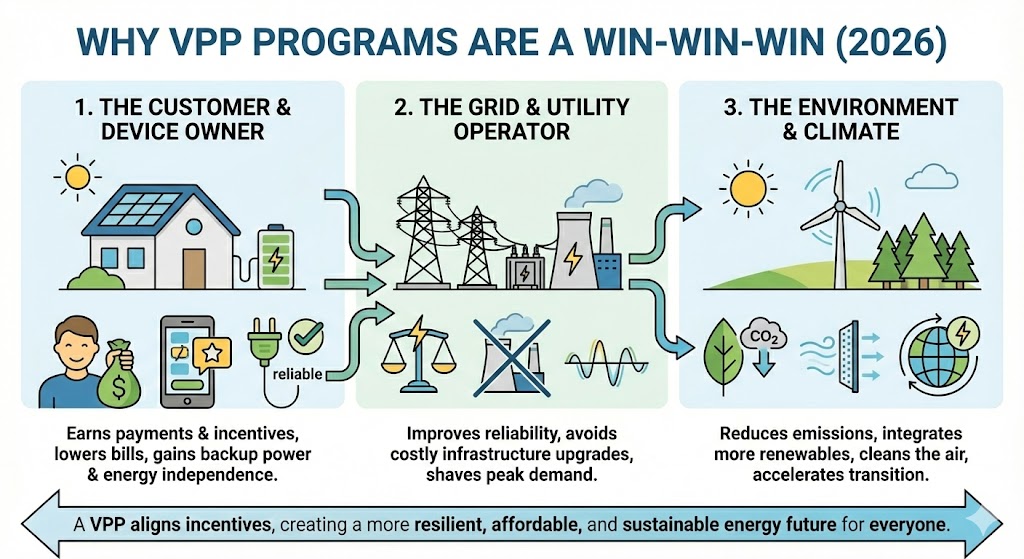
Why VPPs are a "Win-Win-Win"
For the Consumer: Participants are financially compensated. Homeowners essentially become "prosumers," earning hundreds of dollars a year or getting upfront rebates just for letting the VPP manage their battery or thermostat during critical events.
For the Grid Operator: VPPs defer or completely eliminate the need to build multi-billion-dollar power plants and transmission lines.
For the Environment: They maximize the use of clean, renewable energy and drastically reduce our reliance on fossil-fuel peaker plants.
The Hurdles Ahead
Despite the massive growth, VPPs face challenges. The biggest bottleneck right now isn't the technology; it is the regulatory plumbing. Interconnection rules vary wildly by state and province. Additionally, many traditional utilities are reluctant to rely on third-party aggregators (like a solar company) instead of their own centralized power plants.
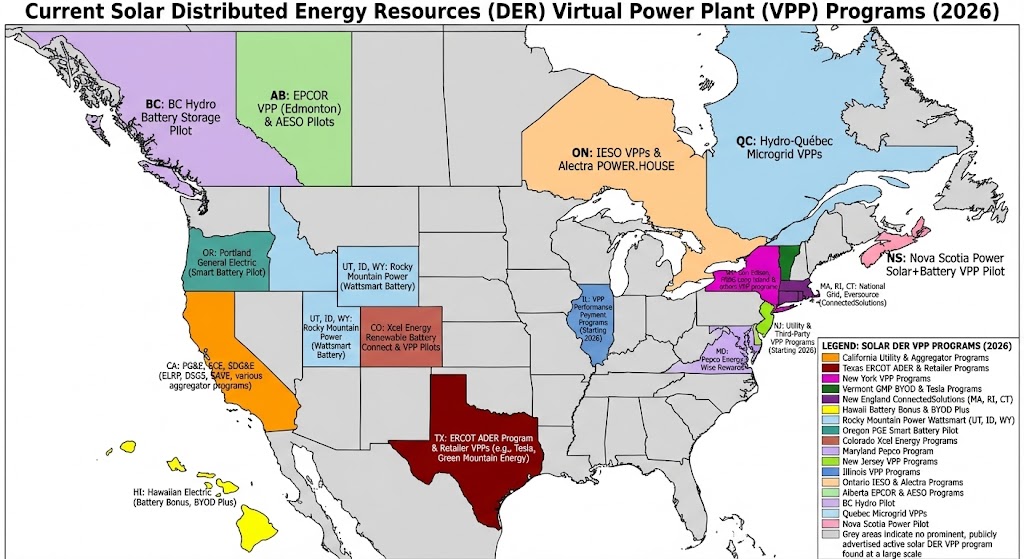
Where VPP Programs are Currently Happening
New VPP programs are launching all the time. The map below was generated on February 27th, 2026. Canada and the United States both have multiple VPP programs in various provinces/states.

Was this article helpful?
That’s Great!
Thank you for your feedback
Sorry! We couldn't be helpful
Thank you for your feedback
Feedback sent
We appreciate your effort and will try to fix the article