Note: This article was created for the Solis S6-EH1P(3.8-11.4)K-H-US inverters series.
The S6 hybrid inverter series is capable of working with a gas-powered generator.
Two use cases are supported:
1. Grid-tied (on-grid) systems that have an external third-party autotransfer switch (ATS)
2. Off-grid systems that utilize a 2-wire dry contact connection between the inverter and the generator
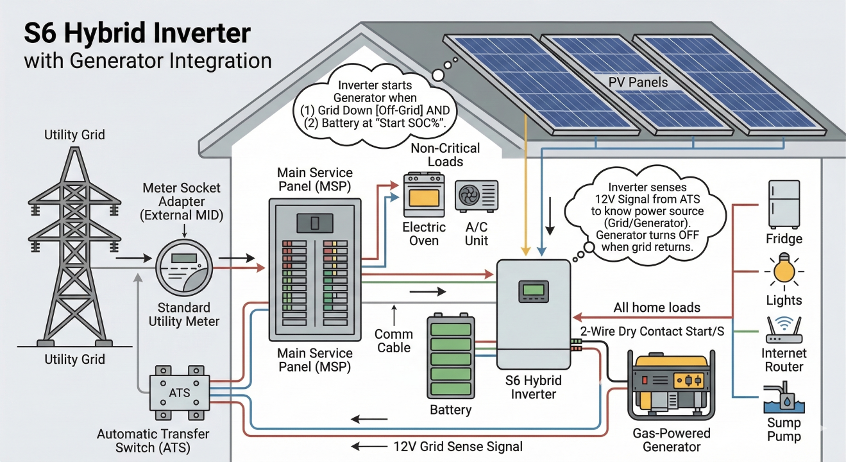
The inverter has a set of pins that can connect to a generator which support 2-wire dry contact automatic start/stop. The inverter turns the generator on automatically when (1) the grid is down or absent [off-grid] and (2) the battery reaches the set “Start SOC%” SOC% meaning state-of-charge %.
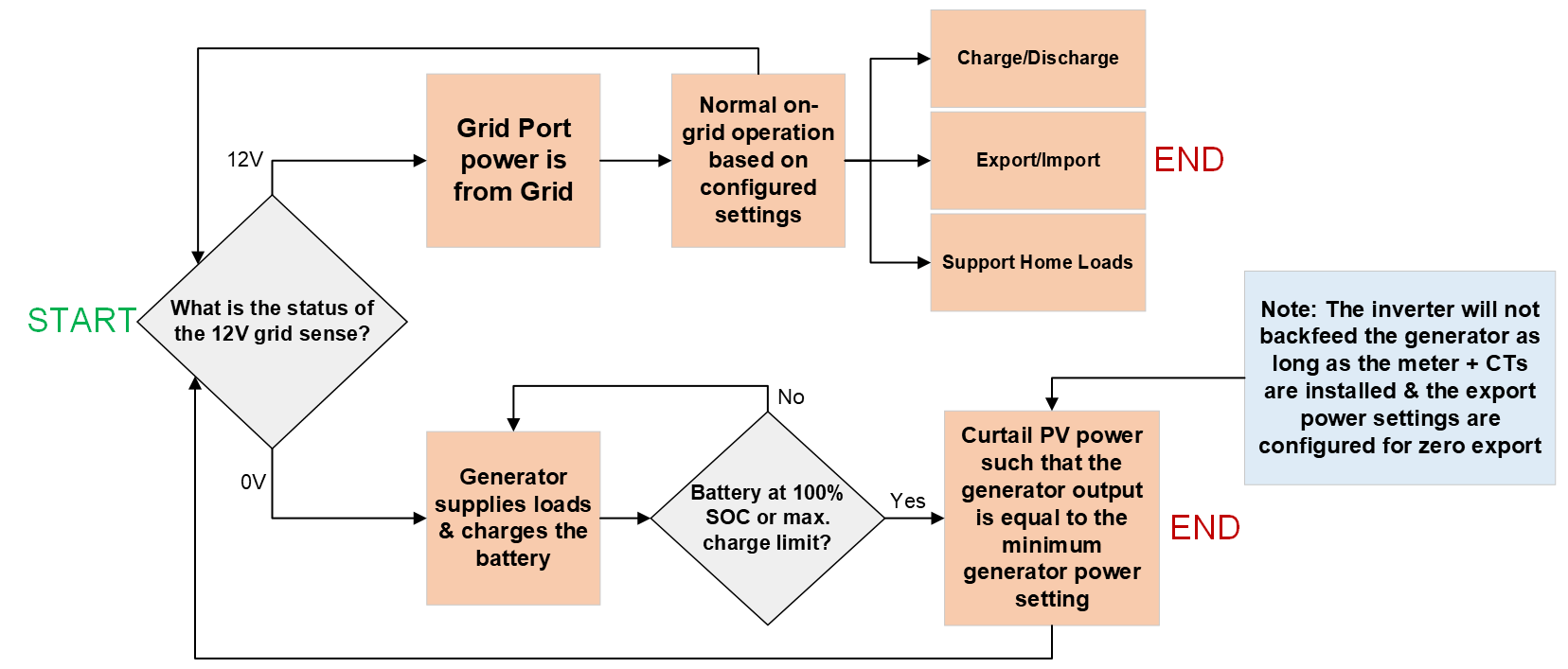
For on-grid systems using an external ATS to switch from grid to generator, there is a second set of wires that must connect to the inverter. This is called the 12V grid sense signal, which is how the inverter knows whether the AC power coming to the grid ports are from grid or from generator. When the system is running in backup with the generator on, the inverter will sense the 12V signal and then turn the generator off so the system can reconnect to the grid.
Grid-Tied (On-Grid) Systems with a Generator and an External Autotransfer Switch (ATS)
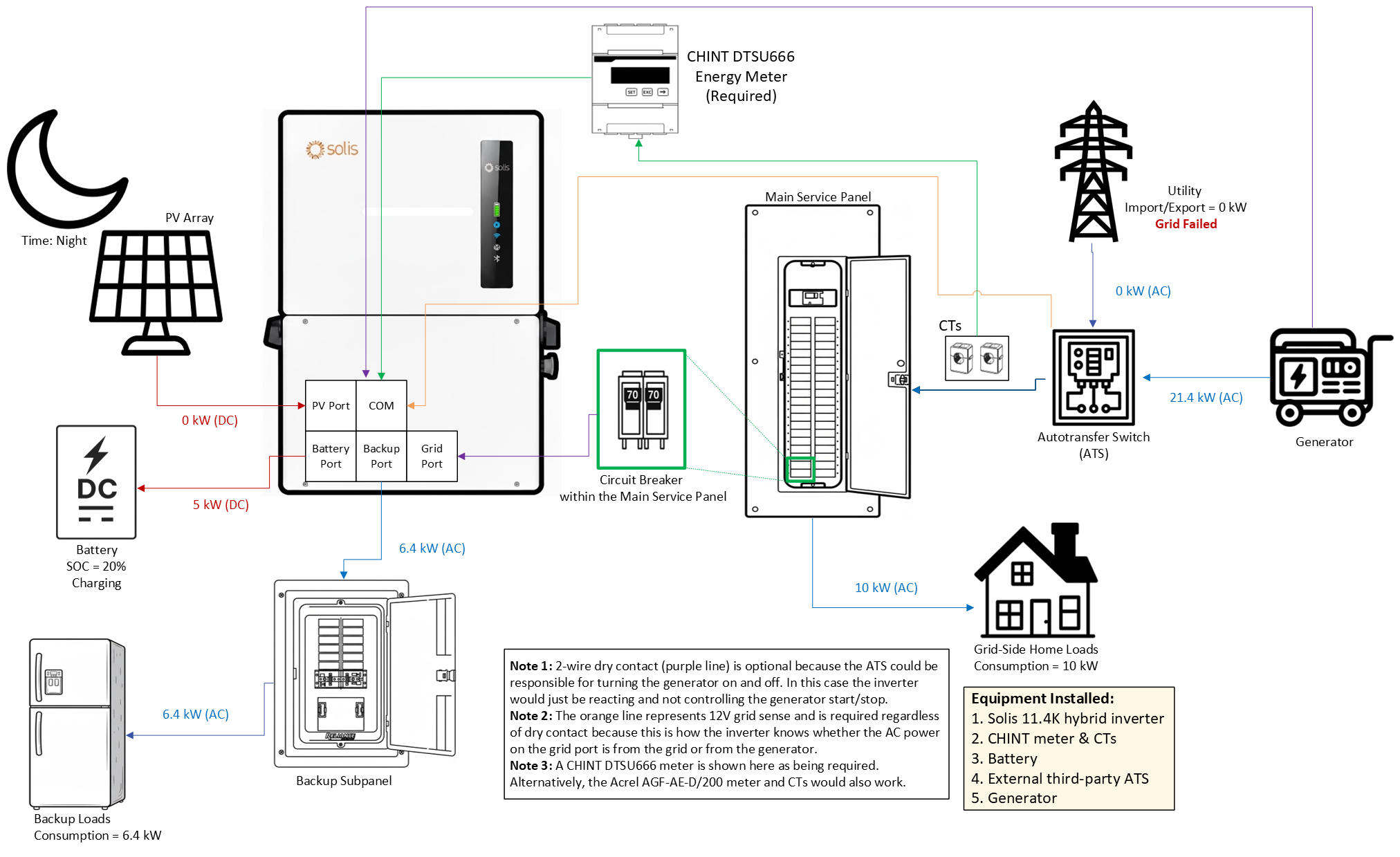
For grid-tied systems utilizing a generator as a backup power source during prolonged outages or periods of low solar production, the generator must be connected to the grid-side of the inverter. An external Automatic Transfer Switch (ATS) is required to manage the transition between the grid and the generator.
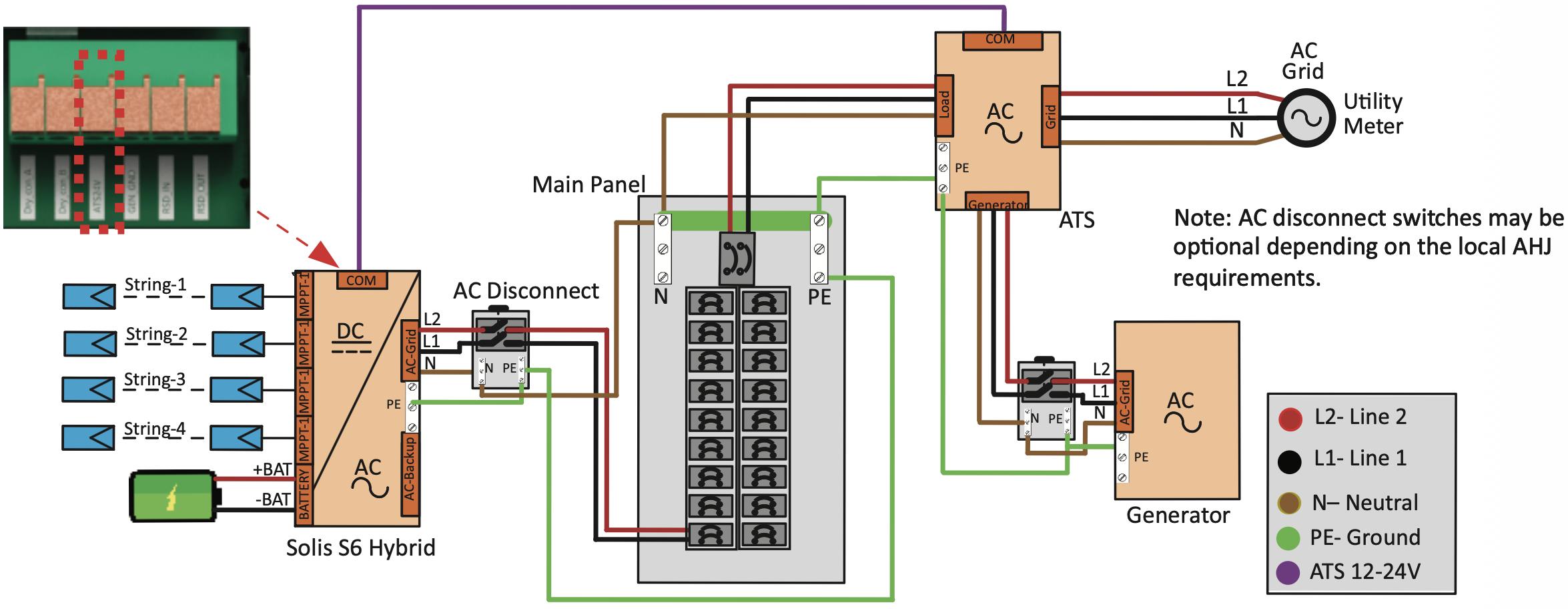
Communication Wiring: Connect the ATS to the inverter's ATS24V pin. This allows the ATS to signal the inverter whenever it switches the power source from the grid to the generator.
PV Curtailment (Safety Feature): Upon receiving the generator signal from the ATS, the inverter will automatically curtail Photovoltaic (PV) power production to zero. This prevents the inverter from backfeeding power into the generator, avoiding potential equipment damage.
Battery Charging: While the system is running on generator power and PV is curtailed, the generator can still be used to charge the connected battery.
Grid Restoration: Once grid power is restored and the ATS switches the connection back to the grid, the inverter will automatically resume normal PV power production.
Alternative Control (Dry Contacts): As an alternative to ATS-driven control, the inverter's dry contact pins can be used to automatically start and stop the generator based on the battery's State of Charge (SOC). Note: Even when using dry contacts for generator control, the physical power connection from the generator must remain on the grid-side of the inverter.
Logic Diagram for Grid-Tied Systems with Generator and External ATS using 12V Grid Sense (no dry contact)
Use-Case Scenario Drawing for Grid-Tied Systems with Generator and External ATS:
Wiring Diagram for Grid-Tied Systems with Generator and External ATS:
Off-Grid Systems with a Generator and an External Autotransfer Switch (ATS)
Note: Off-grid means that there is no grid present at any time. An example would be a cabin in the woods or a remote home that has no grid connection at all. If the grid is present even just some of the time only, please see the section above. This section is for true off-grid systems where the utility grid is 100% absent.
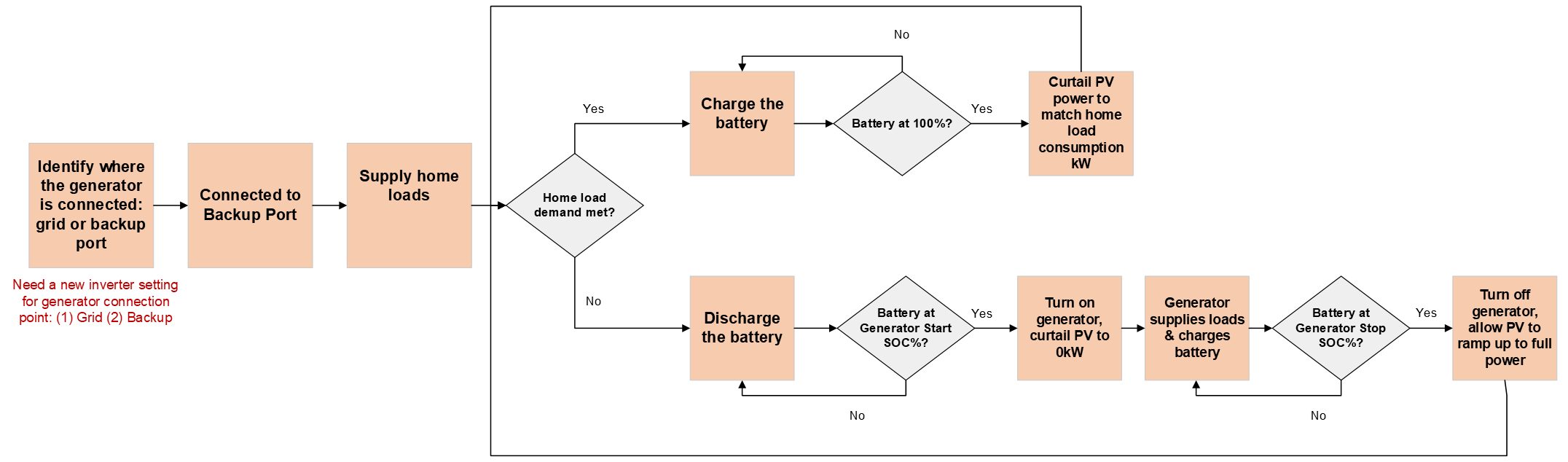
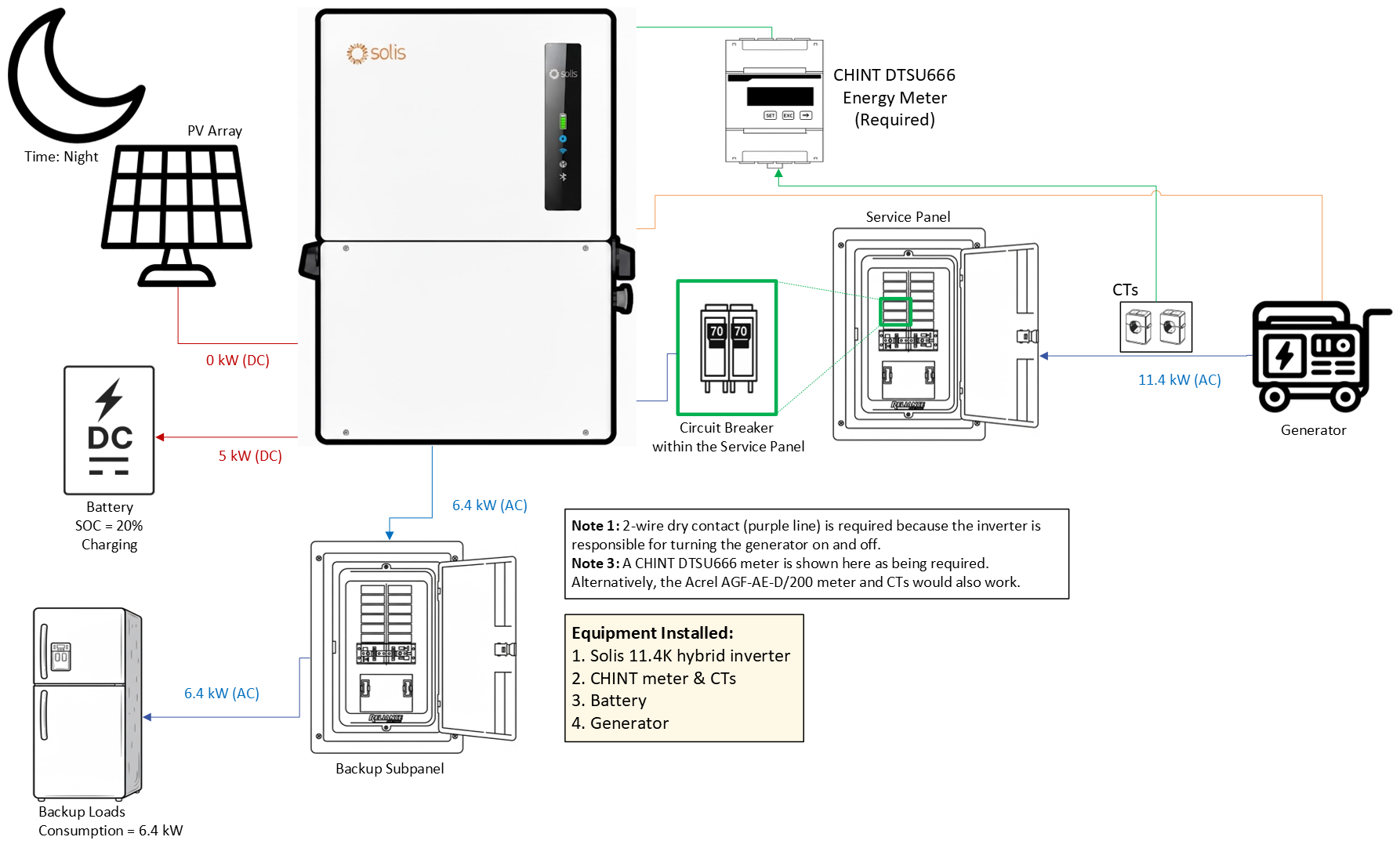
For completely off-grid systems, a compatible generator can serve as a reliable substitute for grid power. The inverter autonomously manages the generator's operation using a 2-wire dry contact connection, turning it on and off based on the battery's State of Charge (SOC).
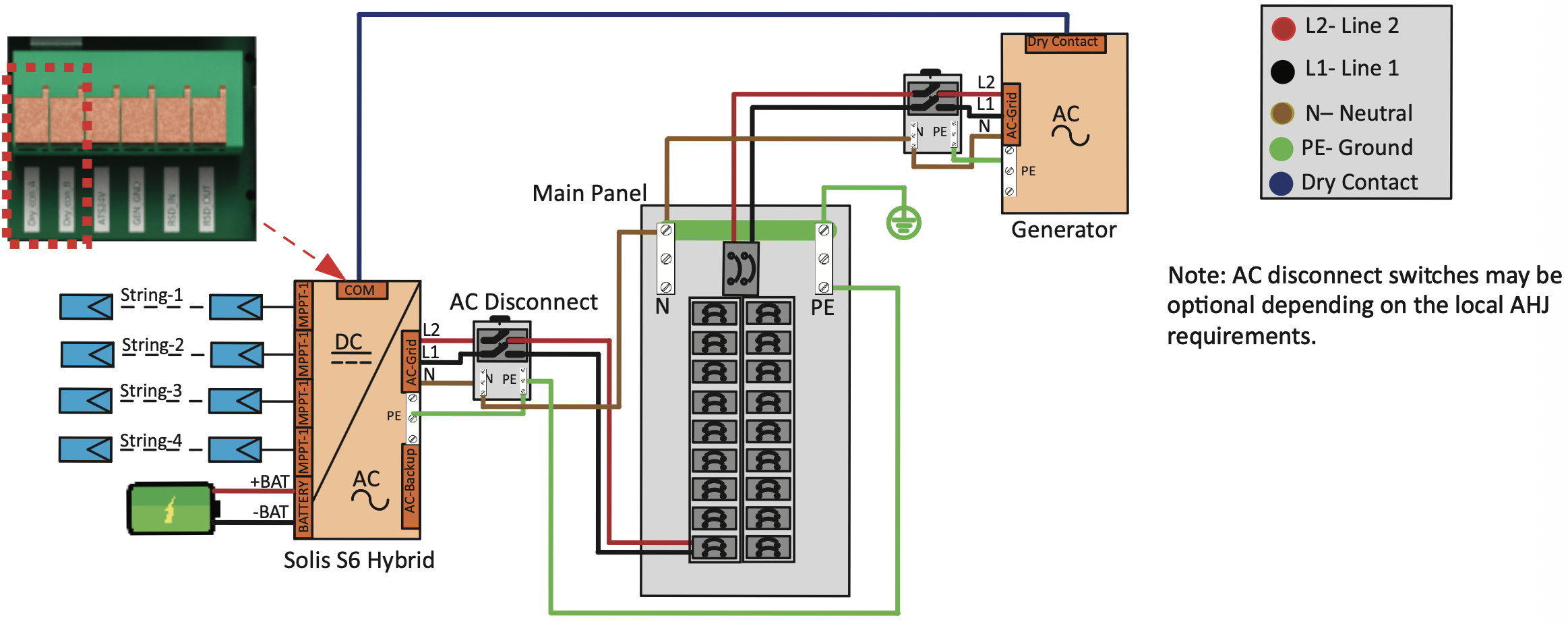
Wiring Connection: Connect the generator's 2-wire dry contact start/stop terminals directly to the inverter's
Dry_con AandDry_con Bpins.Auto-Start Logic: When the battery discharges down to the user-configured "Start SOC%", the inverter automatically triggers the dry contacts to start the generator.
Power Distribution: While the generator is running, its power is utilized to both feed the active home loads and charge the connected batteries, bridging the gap when PV production is insufficient.
Auto-Stop Logic: Once the battery recharges to the user-configured "Stop SOC%", the inverter signals the dry contacts to automatically shut the generator down.
Use-Case Scenario Drawing for Off-Grid Systems with Generator using 2-Wire Dry Contact:
Wiring Diagram for Off-Grid Systems with Generator using 2-Wire Dry Contact:
Was this article helpful?
That’s Great!
Thank you for your feedback
Sorry! We couldn't be helpful
Thank you for your feedback
Feedback sent
We appreciate your effort and will try to fix the article